Voice AI for Non-Engineers: What You Can Actually Build Yourself
 HeybreezAI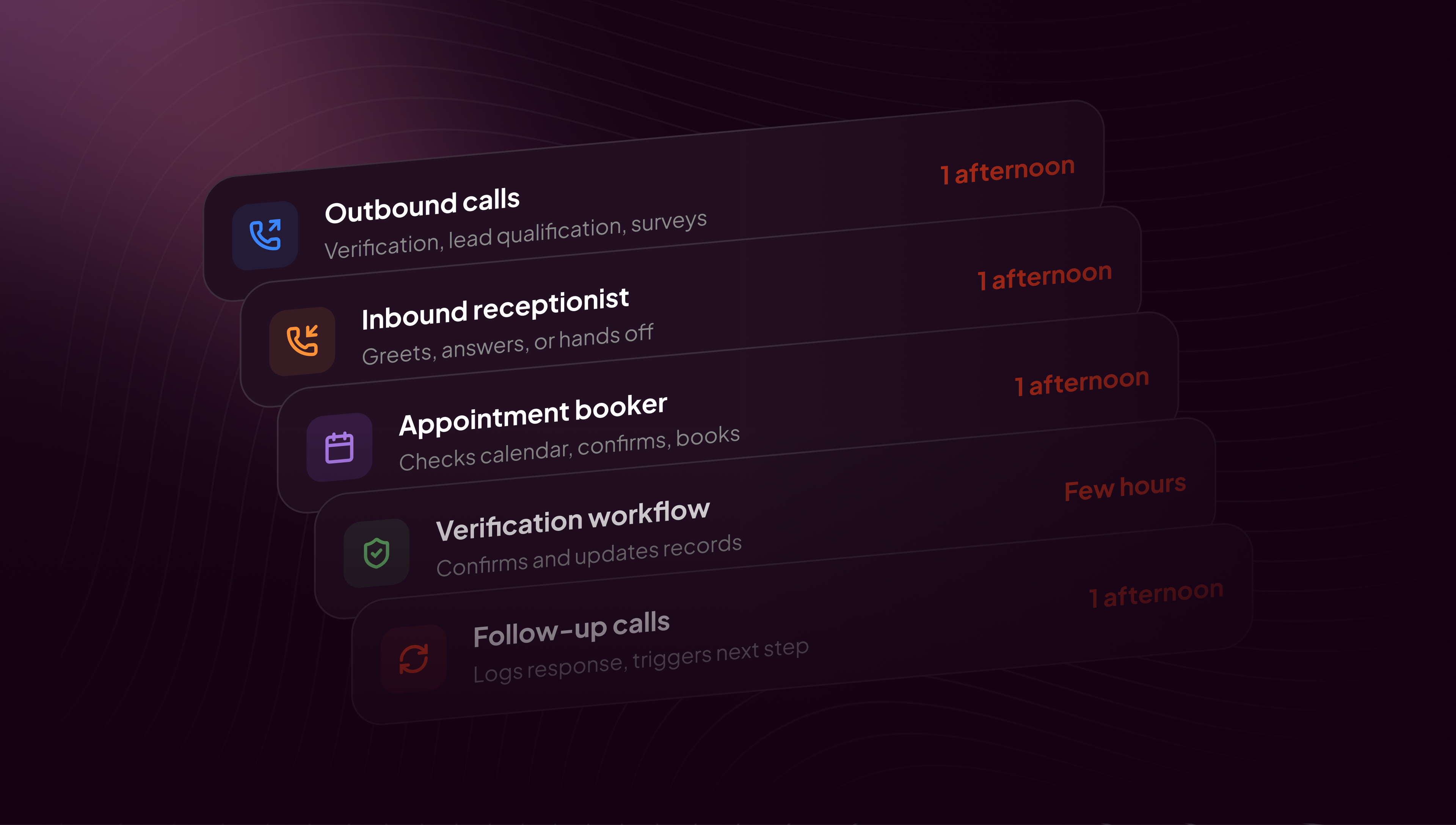
The perception that voice AI is engineer-only is out of date. Here is what a non-technical operator can build in an afternoon on a modern voice AI platform, and where engineering still earns its keep.
The first question every non-engineer asks about voice AI is the same. “Do I need to hire someone to build this?”
For most workflows, the answer is no.
Building an AI voice agent used to be an engineering project. Setting up the telephony. Wiring the speech-to-text layer. Choosing the LLM. Integrating the text-to-speech voice. Orchestrating the handoffs. Building the retries. Every piece was a build. Every build required a developer.
That is no longer where the industry is. The good voice AI platforms are no-code by design, and the person who runs your operation can build the operation. Here is what that actually looks like.
What you actually need
Three things. None of them have a computer science degree.
First, a clear picture of the call you want to run. Who is calling or being called, what the conversation should accomplish, and what happens when it ends. Not code. Just a scene in your head, written down.
Second, a plain-English description of what the agent should do. Not a system prompt. A briefing, the same way you would brief a new hire on Monday morning. Conversational AI platforms have gotten good enough that this is the primary interface for shaping the agent’s behavior. Four sentences will get you started.
Third, a login to the platform. That is it.
The voice AI stack you no longer have to assemble
It helps to know what the platform is holding for you, if only so you can tell when a vendor is quietly handing a layer back.
Every voice agent runs on the same five layers. Telephony is the phone number and the call leg, usually Twilio, Telnyx, or a SIP trunk. Speech-to-text is the transcription layer, where Deepgram, AssemblyAI, and OpenAI Whisper compete on word error rate and latency. The LLM is the reasoning layer, typically OpenAI GPT, Anthropic Claude, or Google Gemini, and increasingly a speech-to-speech model like the OpenAI Realtime API. Text-to-speech is the voice itself, where ElevenLabs, Cartesia, and PlayHT are the names you will hear most. Orchestration is the part nobody demos: turn-taking, barge-in and interruption handling, latency budgets, function calling into your CRM, retries, and what happens when one layer fails mid-call.
Two years ago, integrating those five layers was the project. Today it is the platform’s job. You pick a voice from a dropdown. You do not benchmark TTS vendors.
What you can build in a day
More than you probably expect.
A basic outbound calling workflow
The agent calls a list, introduces itself, asks the questions you have written, and records the answers in a spreadsheet or CRM. This is the most common first project. Verification calls, lead qualification, quick surveys. It usually takes an afternoon.
An AI receptionist for inbound calls
The agent answers, greets the caller, asks what they need, and either handles the request directly or hands off to a person. Also an afternoon. Doctor’s office, sales line, service dispatcher.
An AI appointment booker
The agent checks the calendar, offers the caller a slot, confirms, sends a calendar invite, and drops the record into the CRM. This is a longer afternoon, but not a week.
A verification workflow
The agent calls to confirm data on file, updates whatever the caller corrects, and closes the ticket. A few hours. Insurance claims, address checks, subscription renewals.
A follow-up workflow
The agent calls after an event, asks for a review or a next-step commitment, logs the response, and triggers the next action in your system. An afternoon.
The pattern: any workflow that a competent office manager, sales lead, or dispatcher could describe in three sentences is buildable in a day. The platform handles the parts that used to require an engineer.
What this looks like in the field
The cleanest test we have run at HeyBreez was at Zain Jordan, a large MENA telco customer. A user there accessed the platform, learned it once, and built a working demo for an internal request within two hours. Not with our engineers. With their team. One person, one login, one afternoon.
That is the deployment pattern we see repeatedly. Someone non-technical opens the canvas, writes the agent instructions the way they would write a job description, wires a couple of Path Steps, and hits publish. The call rings. The workflow runs.
What still needs an engineer
To be honest about it: not everything is no-code.
Deep integration with a system that has no off-the-shelf connector still needs a developer. If the CRM is a home-grown internal tool with a custom API, someone will need to wire the HTTP request block to it. Salesforce and HubSpot are a dropdown. A 2011 internal ticketing system is not.
High-security deployments with custom compliance requirements need infrastructure work. On-prem installs, air-gapped environments, and specialized SIP routing rules are engineering territory.
Custom voice models trained on your data need voice engineers. So does anything that requires unusual latency profiles or unusual language coverage, like a dialect the major TTS vendors do not ship, or a sub-500ms budget on a long-distance leg.
But those are the exceptions. The common workflows, the ones that account for most of the calls a business actually makes and receives, are operator work. Not engineering work.
The operator moment
There is a specific moment we see in almost every deployment. An office manager, sales lead, or operations lead builds their first workflow, hits the publish button, and watches a real call route through it. The look on their face when the agent handles the call correctly is the point of no return.
It is the moment where voice AI stops being an intimidating technology and starts being a tool they own. The workflow becomes theirs. The improvements are theirs. The tuning as the business changes is theirs. They do not wait on a vendor for the next version. They open the canvas, make the change, and hit publish.
Where HeyBreez fits
That shift is not incidental. It is what we built HeyBreez to enable.
The canvas is designed for the operator, not the engineer. Blocks you can point at. Path Steps that read like verbs. Agent instructions written in the same voice you would use in a Monday standup. Native connectors instead of hand-rolled API calls. The platform holds the complexity, all five layers of it, so the operator can hold the operation.
The engineer builds the platform. The operator builds the operation.
That is the shift. And that is what makes voice AI a business tool now, not a research project.
Frequently asked questions
Do I need to know how to code to build a voice AI agent?
No. On a no-code voice AI platform you build the workflow on a visual canvas and write the agent’s instructions in plain English. Most first workflows, whether an outbound calling list, an AI receptionist, or an appointment booker, take an afternoon.
Which providers do voice AI platforms use underneath?
Most build on a mix: Twilio or Telnyx for telephony, Deepgram or AssemblyAI for speech-to-text, OpenAI, Anthropic, or Google for the LLM, and ElevenLabs, Cartesia, or PlayHT for text-to-speech. A good platform lets you pick a voice and a model without integrating any of them yourself.
How long does it take to build an AI phone agent?
Hours for a first working workflow, not months. At Zain Jordan, one non-technical user built a working demo in two hours on their first day.
When do I still need a developer?
Custom API integrations with home-grown systems, on-prem or air-gapped deployments, custom-trained voice models, and unusual latency or language requirements. Everything else is operator work.
Want to see how fast a non-engineer can ship a voice agent? Talk to us.