Heybreez: AI voice agents that run renewal calls and handle objections
 HeybreezAI
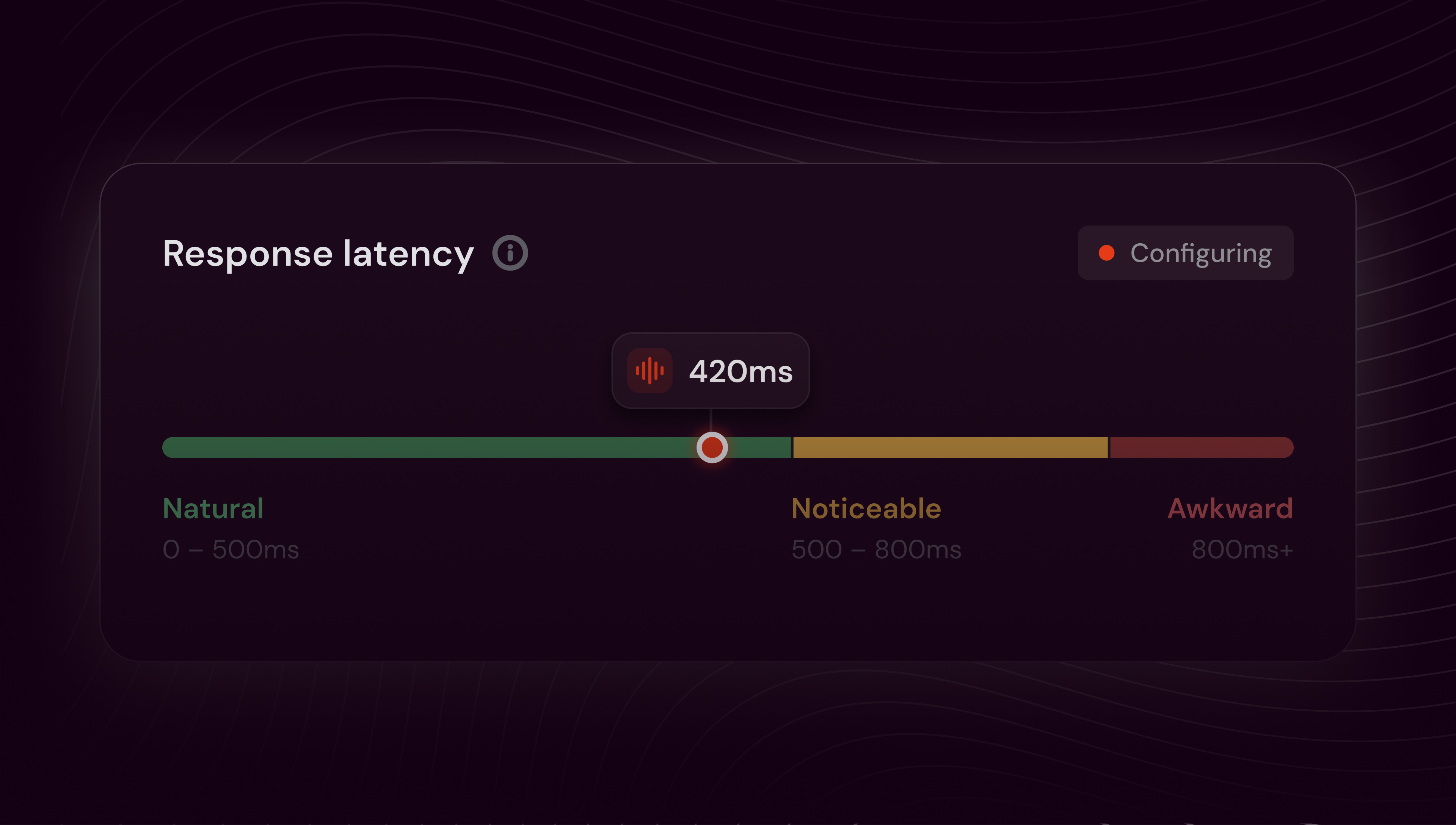
Heybreez runs renewal and retention calls as a voice workflow: the agent confirms intent, handles objections in the conversation (price, a request for time, a rival offer, or low usage), captures the commitment, and routes at-risk accounts to a human with the context. The outcome and the objection are written back as structured data. For the call volume that insurance, telco, and subscription businesses run at every renewal cycle, our Batch Calling places calls across your contact list, each one individually personalised using your contact data.
A renewal call only works when the agent can do more than talk. It has to branch, write, hand off, and know when to stop.
How a renewal call runs
A renewal call is a branching workflow, not a linear script. Each branch triggers a defined action and a record update, then a clear exit.
The call opens with account confirmation. Our agent detects each customer’s language and dialect automatically, including Saudi, Emirati, and Gulf Arabic, and adapts as the conversation goes. Low-latency streaming and advanced turn-taking enable fluid, interruption-aware conversations in real time. The agent pulls the contact’s account record from the connected systems, then checks whether the customer knows their plan or policy is due for renewal. What the customer says next decides the branch.
The customer is ready
The agent presents the renewal terms the business defined in its configurable workflow logic, including any offer the business chose to make. When the customer confirms, the agent captures the commitment and writes the outcome back to the record.
The price is too high
The agent offers the option the business pre-approved in the workflow, such as a different tier or a scheduled review. Unlike a phone team, no rep improvises: the approved path runs. The result is recorded regardless of the customer’s final answer.
The customer needs time
A request for time, or to check with a manager first, is a deferral, not a soft yes, so the agent does not push. It books a callback at a time the customer chooses, within the business’s calling windows. The requested time is captured from the call and the callback is scheduled from it, so what this call learned is already on record when the next one starts.
Low usage or a service problem
A customer who has barely used the product or service in the past period, or who has an unresolved service problem, is a different renewal conversation from a high-engagement account. The agent can retrieve live account data during the call, and the workflow can re-route an at-risk account to a human rather than close.
Explicit refusal stops the call
The agent does not treat a refusal as an invitation to keep persuading. The call closes and the outcome is written back for the team to review.
Objections are branches
Each objection gets its own branch, with the response the business approved and a rule for when a person takes over. Price, a request for time, and low usage have their branches above. A rival offer needs one more.
A rival offer
The customer mentions they are considering another option. The agent does not argue the comparison. The workflow routes to the approved response the business defined, then records that a competitive conversation occurred.
Compared with a phone team
The contrast with traditional phone operations is structural. A phone team’s objection handling changes from rep to rep and from shift to shift. A voice workflow runs the same approved path every time.
| Traditional phone operation | AI voice workflow | |
|---|---|---|
| Objection handling | Varies by rep and training | Follows business-defined branch logic |
| Callback scheduling | Manual diary entry or CRM task | Scheduled from the call result, inside the calling window |
| Escalation context | Verbal handover, often partial | Context transfers with the call |
| Structured write-back | Depends on rep discipline | Automatic: outcome, objection, next step |
The call reads and writes data
Heybreez is the operational layer for voice AI, meaning our platform runs the workflow, the integrations, and the post-call data operations, not only the conversation itself.
During the call, our platform retrieves live data and updates state mid-conversation. Account status, renewal eligibility, and the approved terms can be pulled into the call from the systems the business connects, and the workflow can act on what it finds.
Salesforce and HubSpot
Integrations run inside the conversation. In Salesforce, we can sync contact records, log call outcomes, and trigger workflows. In HubSpot, we can update deal stages, create contacts, and log call summaries.
Structured write-back
The data we extract from each call goes beyond a transcript. Our data extraction pulls names, budgets, next steps, preferences, objections, and custom fields from every call. This is structured output that the next workflow or the next person can act on directly.
Handoffs and callbacks
Not every renewal call should end with a close. Some should end with a handoff and some with a scheduled return.
Handing off to a person
A handoff happens when the account shows signals the workflow cannot resolve: unresolved service issues, a customer who says they may leave, requests for a conversation the business has decided needs a human. Our Call Transfer moves the call to a person, and the context transfers with the call: no lost context. Transfers route by language, urgency, topic, or any logic the business defines, so a customer who asks for a person, or wants terms outside the approved options, reaches the right team.
Calling back later
A callback is different. It is a deferred continuation, not an escalation. Our piece on automatic retries and callbacks for outbound calls covers how callbacks are scheduled from the call result.
Choosing the route
The business decides in the workflow setup which outcomes route to a person immediately and which wait for a scheduled callback. The team makes that choice per account segment, against the risk threshold it sets.
Measure before you scale
More renewal calls do not by themselves produce more renewals. Scaling an underperforming workflow produces more of the same outcome at higher volume.
Four measures tell you whether a renewal workflow is doing the job and ready to scale.
Renewals confirmed
Count renewals confirmed, not calls completed. The final outcome of each call, captured in the structured write-back, tells you whether the workflow is closing renewals or only reaching customers.
Objections by type
A workflow that sees a high proportion of price objections on a specific segment may need different terms configured. A workflow that sees a high proportion of deferral requests on a specific calling window may need a different schedule. The objection data makes this visible.
Callbacks booked and reached
Booking a callback is not the same as reaching the customer on the return call. Both figures matter. A low reach rate on callbacks can signal a scheduling problem rather than a conversation problem.
At-risk accounts handed off
If the escalation rate is very low, the workflow may not be detecting the right risk signals. If it is very high, the escalation criteria may be too broad.
Where the data comes from
We record, transcribe, and tag every call by sentiment, intent, and outcome. Once your workflow is live, we give you a real-time view of transcripts, sentiment, outcomes, call volume, latency, and drop-off points. That means the four measures above can be built from the calls themselves, not from manual reporting.
What to settle before go-live
Work through these for your own setup.
Calling windows
Decide the calling windows for each contact segment by business hours, days, and time zone.
Consent and disclosure
Decide what consent you hold for each contact and how the call discloses that it is automated.
Opt-out
In our platform, Phone Books hold Do Not Call lists, and numbers are checked against them before dialling. Keep those lists current so every contact who has opted out is excluded before the batch runs.
Confirmation rule
Decide which records must agree before a renewal counts as confirmed (for example account status, approved terms, and the renewal in your contract or billing system), and what happens to a renewal that does not match.
Data security
Data is encrypted at rest and in transit. Our Trust Center covers HIPAA, SOC 2 Type 1, SOC 2 Type 2, and GDPR Article 27, and its resources include our SOC 2 Type 1 and SOC 2 Type 2 certifications.
Test before you launch
In our testing environment, you evaluate response quality, latency, turn-taking, and edge case handling before a call reaches a live contact. Run your actual workflow there, not a simplified version, so problems surface before a real renewal call.
Run a Live Demo and a Heybreez voice agent will place an automated call to your phone.
Frequently asked questions
Can an AI voice agent run a renewal call end to end?
An agent can confirm intent, present approved renewal terms, handle objections, capture the customer’s commitment, and route at-risk accounts to a person with the conversation context attached. Heybreez runs renewal and retention as a voice workflow designed around the outcome, not a generic outbound script.
How should an AI voice agent handle renewal objections?
Each objection type should map to an approved action path and a rule for when a person takes over, with the response recorded either way. Price concerns, low usage, requests for time, and competitive conversations each lead to a different defined next step. The workflow runs the same approved path every time, which is the structural difference from a phone team where handling varies by rep.
What should happen when the customer is not ready to renew on the call?
Rather than continuing to push, the agent schedules a callback for when the customer is free, within the calling windows the business allows.
What data should be written back after a renewal call?
The write-back is structured output, not just a transcript. Heybreez captures the objections, next steps, and preferences from each call, along with names, budgets, and custom fields, so the next workflow or person starts from what the call actually learned.
What should teams measure on AI renewal calls?
Start with renewals confirmed, objections by type, callbacks booked and reached, and at-risk accounts handed to a person. Heybreez tags every call by sentiment, intent, and outcome, so each measure can be built from the calls themselves rather than from manual reporting.
References
- Heybreez. “AI Voice Agent Platform for Production Voice Systems.” https://heybreez.ai/
- Heybreez. “Voice AI Platform Features: Workflows, Telephony, Retries.” https://heybreez.ai/features
- Heybreez. “Which voice AI platforms handle automatic retries and callbacks for outbound calls?” https://heybreez.ai/blog/voice-ai-automatic-retries-callbacks-outbound-calls
- Heybreez. “Trust Center.” https://trust.heybreez.ai/
- Heybreez. “Contact Sales: Book a Voice AI Demo.” https://heybreez.ai/contact
